Patric Güntert
Process | How I Paint | Patric Güntert
Harmony
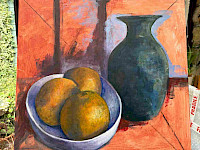
Harmony of colour and composition are important to me and they make me happy, so I use them all the time, even in my abstract work, I like being happy.
The Palette
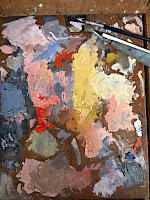
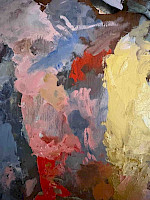
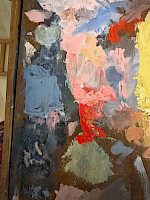
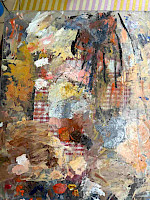
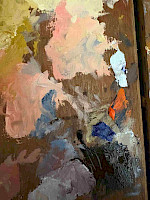
To achieve colours that work instinctively I use a limited palette (think Apelle, Zorn) although avoiding black and normally using dark greys, if I want a black of sorts I often use a mix of Ultramarine Blue and Burnt Umber, but I also like dark subtly tinted greys, they are mysterious, greys are a world of their own and often overlooked.
Although 99% of my palette comes from just five colours, Cad Red, Yellow Ochre, Titanium White, Ultramarine Blue and Burnt Umber, I will also add tiny amounts of other colours, if and when I feel they benefit the main colours on my palette, but in very small amounts, this is my homeopathic approach to my palette.
To avoid the charge of hypocrisy, in common in with most painters I sadly have a vast tube collection of different colours, that mysteriously attached themselves to me in art supplies shops.
Preparing the surface
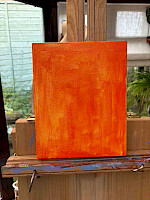
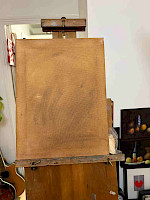
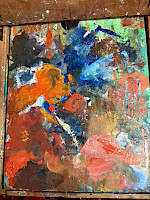
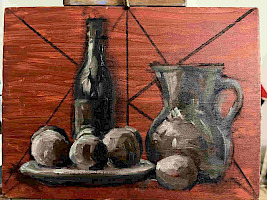
Part of the pleasure of painting is to spend time preparing the surface you are going to work on. Applying gesso to reduce the tooth and create a smooth surface and stop the oil eating into the canvas. I find it is also therapeutic, like prepping veg before cooking. After that I also knock back the surface glare to create a mid tone, normally using diluted Burnt Umber, but sometimes raw sienna if I want a warmer background, and even a green mix if I want to lift skin tones
Drawing and composition
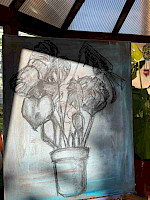
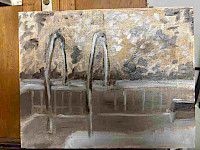
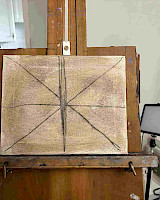
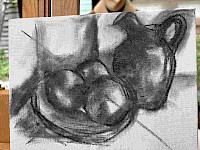
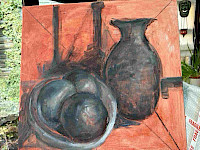
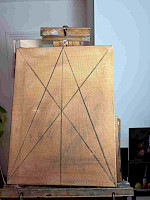
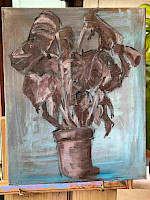
In terms of composition I generally mark the background into symmetric plains or a composition grid, then draw in the rough outline of what I am going to paint with charcoal before using a dilute mix of Burnt Umber and small amounts of yellow ochre to define the light, mid and dark tones i.e. 'brunaille', colour variations of this process are variously called 'the dead layer', grissage, verdaccio and verdaille, this process is as old as the hills but if it works don't knock it.
Colour
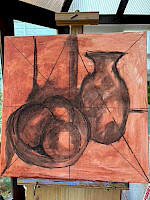
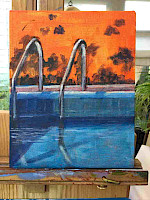
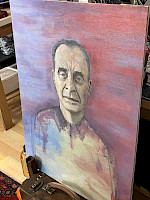
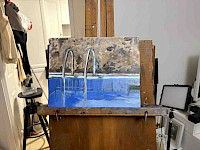
Next I will block in colour and then from that point refine the picture step by step, layer by layer sounds easy but this is when you trust gravity and believe that a brush you don't have will fix everything.
Oil versus acrylic
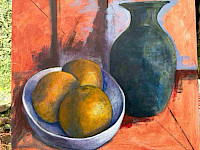
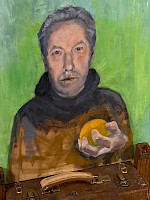
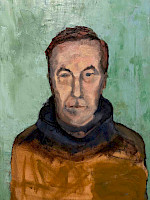
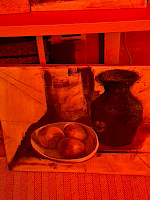
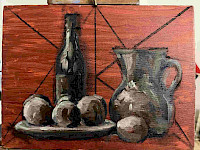
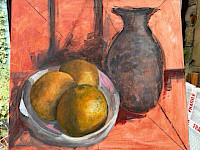
I work in both acrylic and oil. Acrylic for the challenge of speed, and oil for the complex interaction of pigments that result as it dries. Also because oil makes me both patient and reflective, acrylic demands that I get a move on, whereas oil tells me to slow down, both good exercises and when practised alternately can help to grow a different way of seeing and working that compliment each other.
On that point I often paint the same subject and very similar composition once in oil and then in acrylic, it’s fun.
Reference material
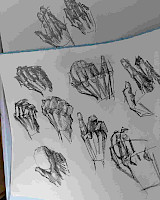
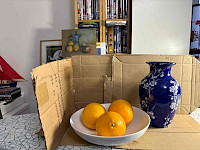
I use photographs and sketches as source material, but I am not reproducing from either, merely using them as starting point to allow me to be clear as to the direction of light and shadow, and to plan the interaction of all elements of the composition.
The stages
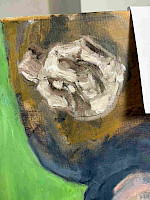
If I am unable to release the work from the ugly stage (yes we all go through that dark place) I will ruthlessly and with some pleasure paint over, and start again, ditto change the background more than is healthy, but that is different story, me and backgrounds.
Mostly I do not wait for inspiration, which as the saying goes does not visit the lazy, I swallow the frog and start, and then expect it to join me somewhere on the way. Other than that drinking tea, swearing and making a mess are all part of the process. The process such as it is, combines early optimism, painful realisation, patience and sadness on a loop, then the return of optimism and a constant challenge to stop or ruin (often ruin) the picture.
Knowing when a painting is finished
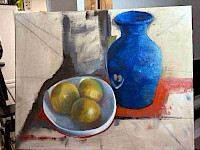
This is followed by more sadness and eventually an argument about what it means to actually say it’s finished, I often lose that argument.